
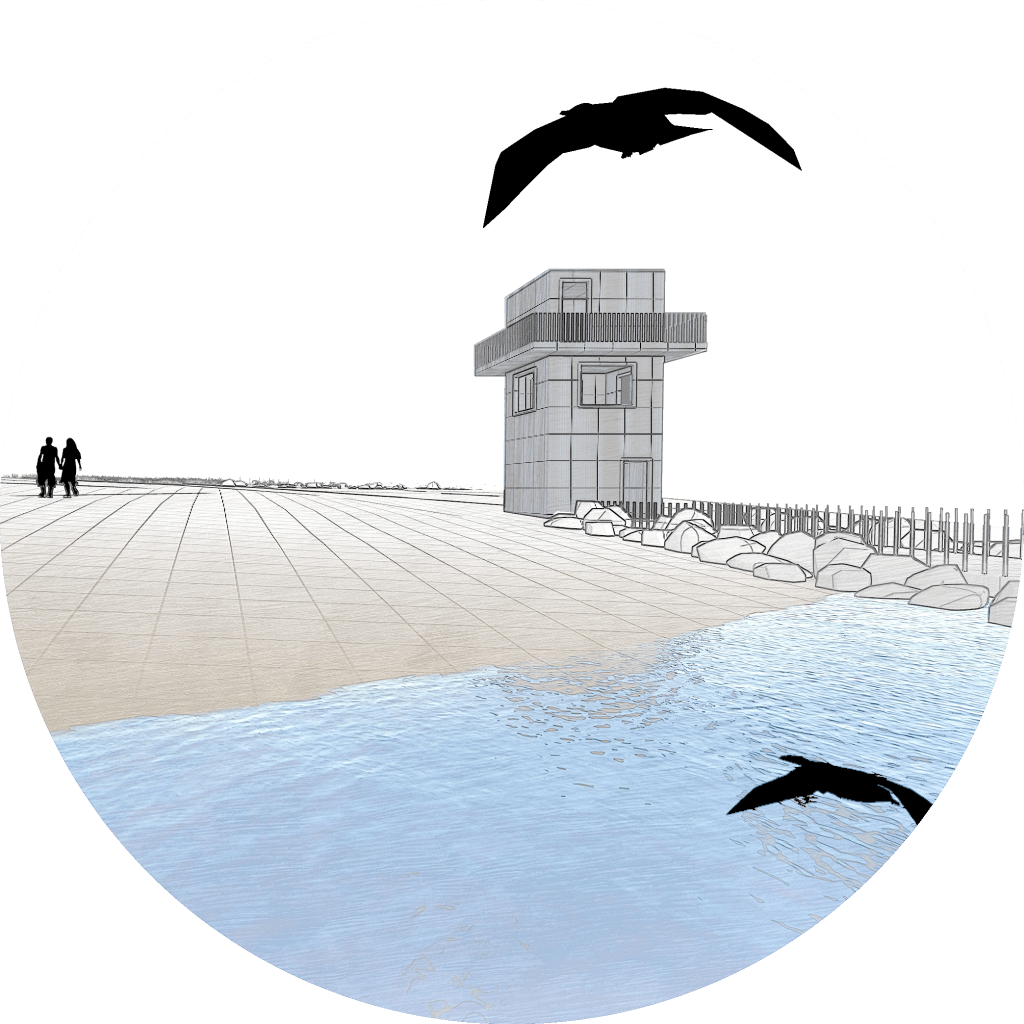
Instructed by Jessica Guinto of SCAPE, this 2022 studio work explored current and future coastline conditions in New Jersey. Along with Diana Boric and Meg Schneid, our team to analyzed the spatial relationship of energy, shoreline infrastructure, and time. Drawing on that original framework of changing infrastructure through time, Diana and I focused on a site within Sandy Hook, specifically the sand spit that connects the vegetated zone of Sandy Hook with the rest of New Jersey’s barrier islands. We created a design that combines power generation with wave energy mitigation and long-term sand deposition strategies, to stabilize this unstable and constantly shifting stretch of sand and road infrastructure.
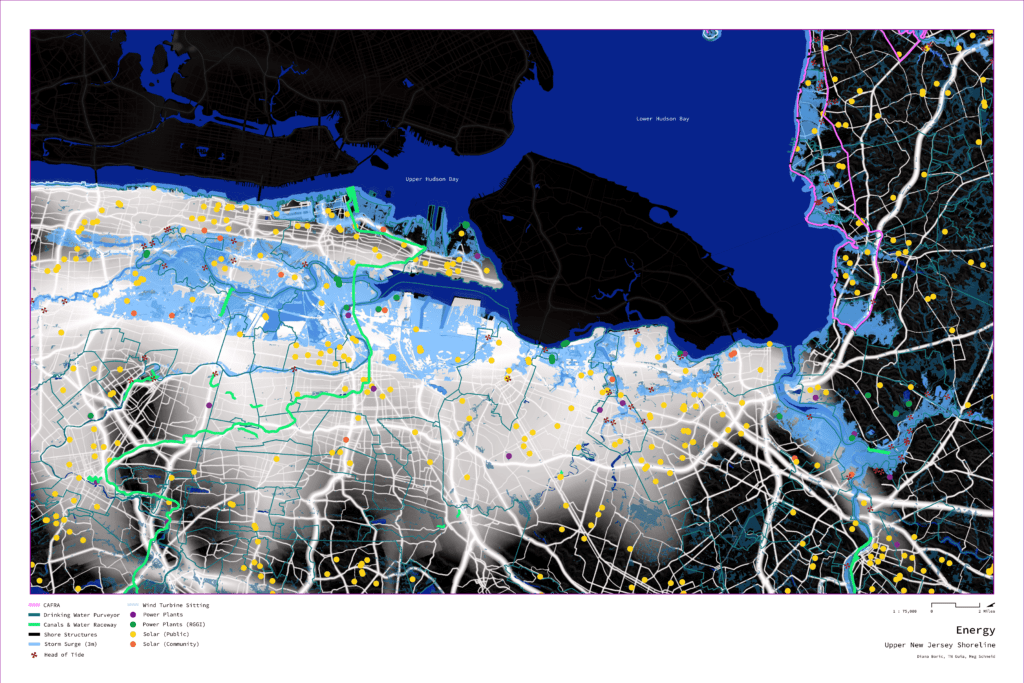
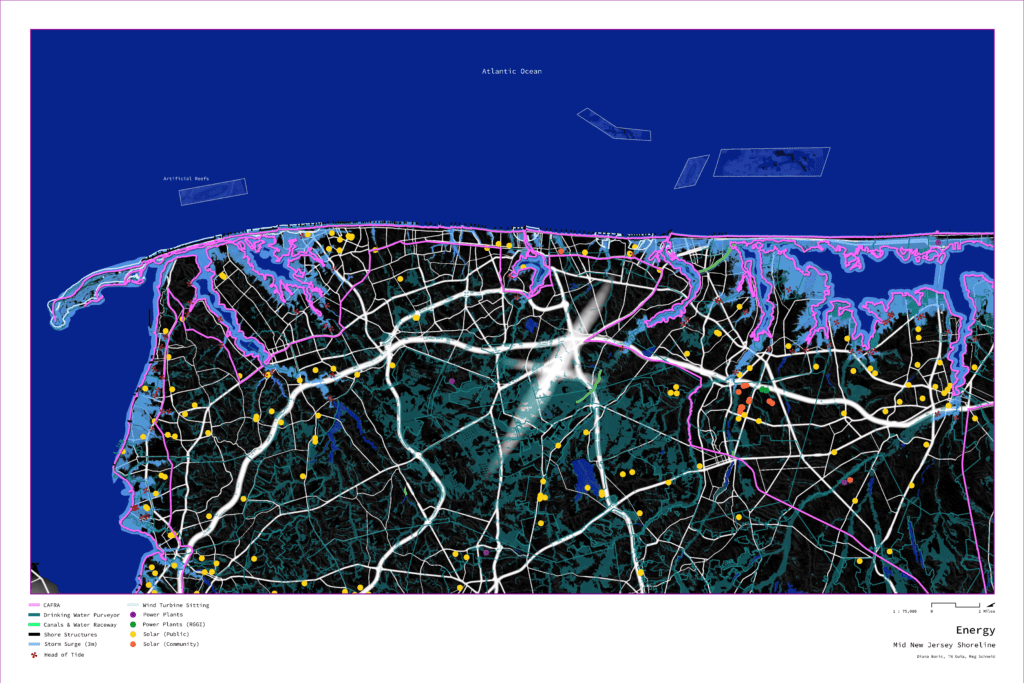

Our base maps explored energy and coastal structures at various points along the New Jersey shoreline.
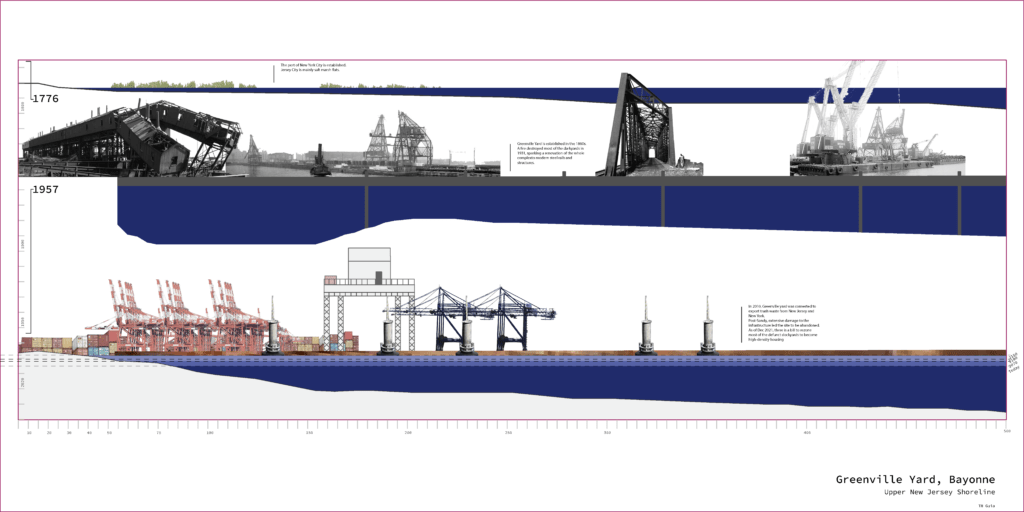
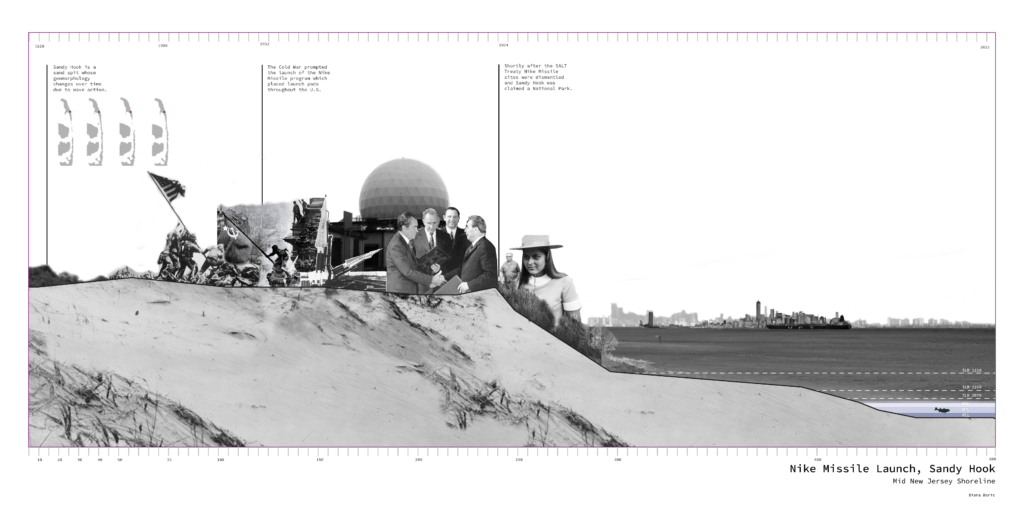
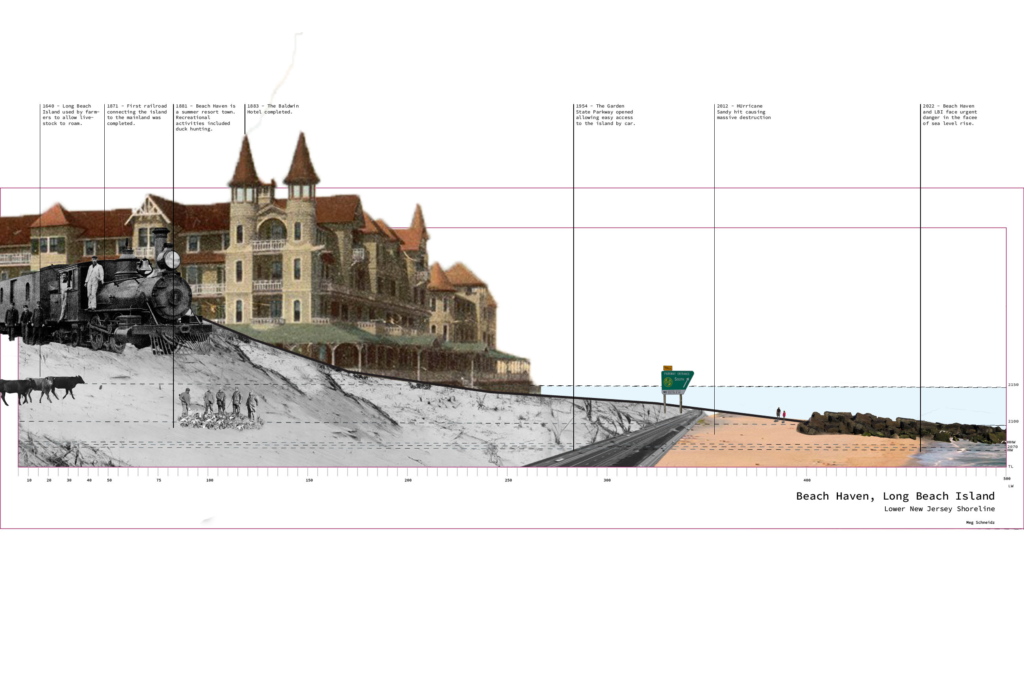
In three locations, one from each base map area, we looked more closely at how energy and infrastructure changed through time.
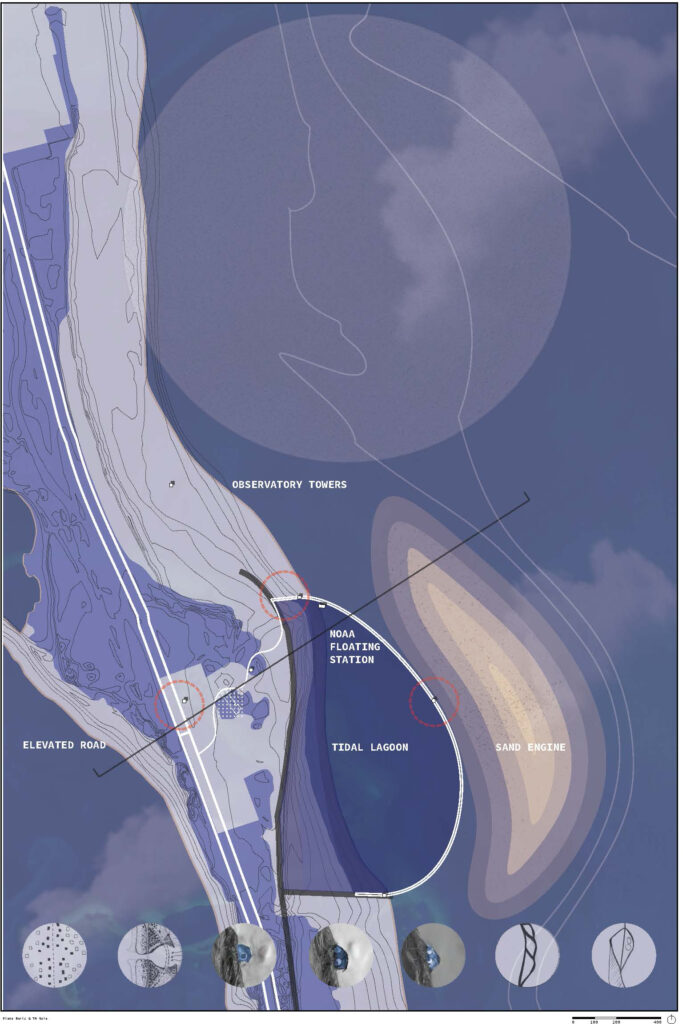
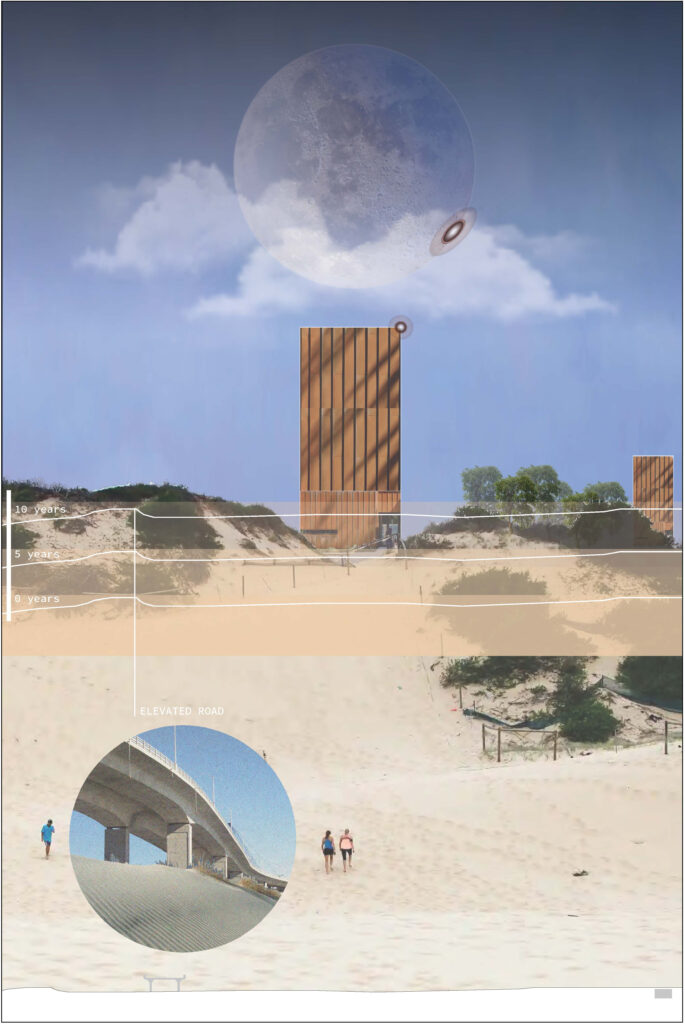
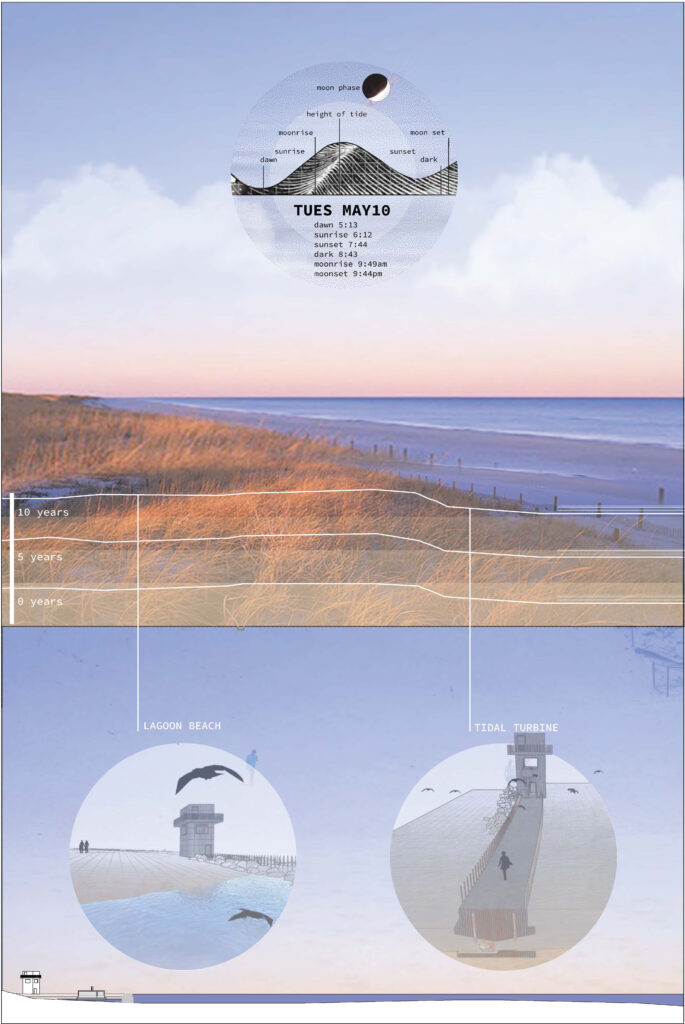
The design intervention in Sandy Hook uses 3 overall strategies to combat tidal drift in the barrier island: vegetation stabilization, sand deposition, and wave disruption. Research on natural dune systems shows that a healthy dune ecology stabilizes the movement of dunes, and the core vegetation zones of Sandy Hook reflected that in having the least historic shoreline shift in the island. The location of our design is both the least vegetated and the most mobile stretch of the island, making it a prime candidate for vegetation stabilization. Currently, the existing access road through this particular stretch is marked by high dunes on either side of the road, demonstrating that the dune system is artificially interrupted continually by human intervention.

Our second and third strategies drew on international case studies: the Sand Motor project in Holland and the Sihwa Lake Power Station in South Korea. The Sand Motor relies on mass sand deposition and the continued forces of nature to spread sand along an under-sedimented beach to revitalize the recreational beaches downstream from the initial deposition site. The power station in Korea is an early example of large-scale use of tidal power generation, a new form of renewable hydroelectric power that uses the energy of long shore tides rather than the linear flow of a dammed river. In practice, a tidal generator only requires an enclosed region of water that has strong tidal flow and nearby transformers to send the power to, which we artificially created in our design by enclosing a stretch of beach. Using a small model (at the bottom of the following board), we tested various lagoon shapes and sand deposition formations along the spit to maximize sand spread along the Atlantic edge of Sandy Hook.
 Tatiène Guia Digital Portfolio
Leave a comment